






 All Insights
Software’s Staying Power Through the Agentic Era
The market is debating whether Agentic AI will disrupt software the way many expected cloud computing would a decade ago. We believe investment cycles suggest the opposite may be true.
Capital tends to flow into new technologies from the infrastructure layer up. Hardware comes first – in the case of AI, semiconductors and compute. Then platforms: model providers and data centers. Value finally reaches the application layer when companies are ready to turn that infrastructure into products.
Software can suffer value compression along the way, but historically it has emerged with the largest piece of the pie. While no two cycles are identical, we believe that pattern will reemerge.
Enterprise incumbents have spent years building the capabilities needed to put Agentic AI to work. In our view, they are now well positioned to capture this next phase of value creation, owing to three durable advantages: context, scale and trust.
The Data Advantage: Context
Enterprise workflows are complex, multivariate processes. To operate efficiently, an AI model needs context shaped around the specific tasks it’s meant to perform.
LLMs are trained largely on general-purpose data from the internet. Trillions of parameters make them powerful, but generic.
To perform accurately enough for enterprise use, models need data that is organized around the workflows and use cases they are meant to serve. That contextualized data is what software incumbents have spent years curating, and it’s what turns a general-purpose model into one that can operate reliably in a specific workflow.
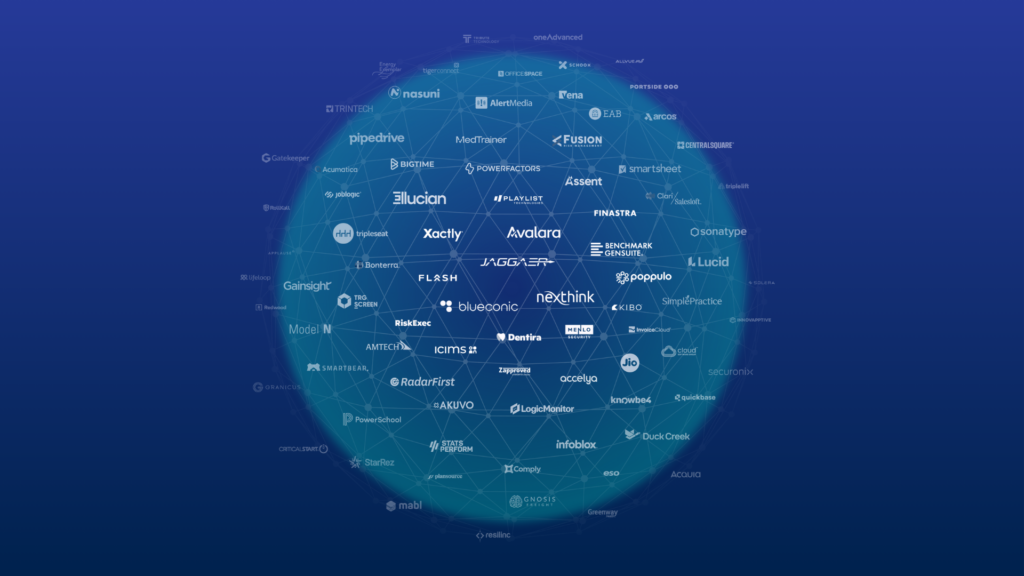
Take Vista portfolio company KnowBe4, a cybersecurity platform focused on security awareness and phishing prevention. Its 15 years of behavioral data across 70,000 organizations gives its agents insight into risky human behavior that models trained on generic threat data might miss. That proprietary context allows its agents to operate with greater precision in a specialized domain.
“Context matters because generic AI models can’t reliably execute complex processes without it. That’s why we believe the players that own the context may gain a more durable advantage.”
Robert F. Smith
Founder, Chairman & CEO of Vista Equity Partners
The Execution Advantage: Scale
Context gives incumbents the knowledge to build effective agents. Scale gives them the ability to roll out those agents across complex enterprise environments.
Most enterprise workflows are not standard. They’ve been customized over the years to fit each organization’s systems and requirements. Simply plugging in a new model does not work. Automating these processes requires understanding the workflow well enough to know where and how agents can be deployed safely.
Incumbents already have infrastructure built around each client’s environment: testing processes, change management protocols and implementation teams. This allows them to deploy agents across custom workflows in parallel, without disrupting critical systems.
Consider a company that has worked with DMVs across several states. It knows how licensing requirements, road test standards and paperwork systems differ by jurisdiction, and has experience operating across them without disruption. A new entrant would have to build that same fluency from scratch.
The Opportunity for Software
AI companies’ biggest strengths are funding and speed of innovation. But incumbents’ advantages are built on something capital cannot replicate: time in the market. Context, scale and trust compound over time, and as we observe enterprise sales cycles stretching beyond two years, those advantages cannot be manufactured overnight.
As the market evaluates the next phase of capital deployment at the application layer, software’s footing suggests something other than AI displacement. It points to value creation among companies with strong foundations for AI, and the ability to translate those advantages into measurable value through agents.
For a closer look at how software incumbents are positioning for Agentic AI, read our full report: Agentic AI and the Future of Enterprise Software.



Agentic AI and the Future of Enterprise Software